



Transformer Winding categories and Advancements
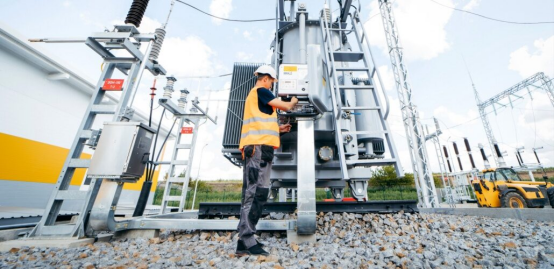
Transformers perform an essential role in electricity distribution, increasing or decreasing voltage as power is transmitted from power stations to consumers. Electricity is stepped up to a high voltage to minimize losses during long-distance transmission, and then stepped down by one or more substations as it makes its way to the households, factories, and businesses that need power.
There are transformers at every major junction point in the grid. They are essential for nearly all construction.
It doesn’t matter if you want to build housing, AI data centers, renewable energy installations, EV charging stations, semiconductor fabs, or drone factories — you need transformers for all of the above.
Not even the fossil fuel industry is exempt — oil and gas drilling both require special transformers to supply power to rig machinery, compressors, refineries, and more.
Winding machines are key equipment in transformers, motors, inductors, and other electromagnetic components. With the growing demand for high-efficiency and automated production, winding machines have evolved significantly, incorporating advanced control systems, AI-driven optimization, and Industry 4.0 integration
Transformer Winding Machines categories
1.Used for winding HV (High Voltage) and LV (Low Voltage) coils in power and distribution transformers.
2.Can handle different wire types (round, rectangular, foil) with tension control for uniform winding.
Examples: Automatic vertical/horizontal winding machines, CNC-controlled models.
transformer Winding Machines: Precision and Efficiency in Coil Production
Transformer winding machines are specialized equipment designed to produce high-accuracy coils for power and distribution transformers. These machines handle various wire types, including round, rectangular, and foil conductors, ensuring uniform winding tension and precise layering.
Modern transformer winding machines feature CNC control, servo-driven mechanisms, and automated tension systems, enabling consistent quality and reduced material waste. Advanced models integrate IoT and AI technologies for real-time monitoring, predictive maintenance, and adaptive winding adjustments.
Key applications include HV/LV transformer coils, toroidal windings, and layer-wound foil winding designs, supporting industries from energy transmission to electric vehicles. With increasing demand for energy-efficient transformers, these machines play a vital role in smart grid and renewable energy systems.