


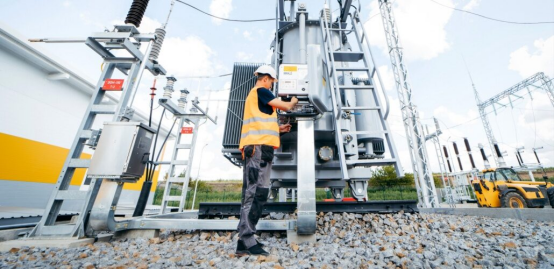



The Struggle Between Light and Darkness: The U.S.-Iran Conflict Through the Lens of Transformers
In the history of modern warfare, few industrial components have occupied as subtle yet decisive a role in strategic competition as the power transformer. Standing unobtrusively on the outskirts of cities, it converts high-voltage electricity into usable power for homes, businesses, and industry. Yet in times of conflict, it becomes an invisible fulcrum upon which victory and defeat turn. From the carbon fiber offensive of the 1991 Gulf War, to the sudden blackout that enveloped Baghdad in 2003, and to the disruption of data centers amid the renewed U.S.-Iran tensions of 2026, transformers have remained central to both military strategy and civilian resilience.
- Precision Surgery on the Electrical Grid
On the night of January 17, 1991, above the Persian Gulf, U.S. B-52 bombers released not conventional high explosives, but hundreds of specialized dispensers. Deployed at an altitude of 300 meters, these canisters dispersed tens of thousands of carbon fiber filaments, a mere 0.1 millimeters in diameter. Drifting like fine dust in the wind, they settled over Iraqi substations and high-voltage transmission lines.
For transformers, this represented a catastrophic soft intrusion. Highly conductive, the carbon fibers instantly short-circuited 220-kilovolt lines. Inside transformers, current meters spiked to critical levels, prompting protective relays to trip. More destructively, electric arcs exceeding 2,000°C erupted from insulators, vaporizing copper conductors. Four turbine generators shut down within ten minutes, eliminating 1,200 megawatts of electrical capacity.
This marked the first large-scale operational use of graphite bombs in warfare, and the first time transformers were systematically targeted as strategic assets. Coalition aircrews reported that urban illumination vanished, and Iraqi command and control radio signals weakened by an estimated 40 percent. Once brightly lit, Baghdad was plunged into darkness. Hospitals operated briefly on diesel generators; fuel pumps ceased functioning, and surgical teams continued operations by flashlight.
From a military perspective, this constituted an exemplary non-kinetic strike: it avoided widespread structural destruction and mass civilian casualties, while precisely neutralizing Iraq’s military nerve center. The inherent vulnerability of transformers—critical nodes in the power system—was starkly exposed. When Iraqi maintenance crews attempted to clear the filaments from 30-meter transmission towers, wind-driven re-deposition triggered repeated short circuits, injuring personnel and rendering repairs nearly impossible.
- Strategic Ambiguity in the Darkness
If the 1991 Gulf War demonstrated transformers as direct military targets, the 2003 Iraq War revealed their status as a strategic enigma.
At 8:00 p.m. on April 3, 2003, coinciding with the U.S. armored advance on Baghdad International Airport, the capital was abruptly plunged into darkness. Despite the arrival of coalition forces one week earlier, electrical service remained largely non-restored. U.S. authorities maintained that the Saddam Hussein regime had deliberately de-energized the grid as a tactical measure; Iraqi electrical engineers attributed the failure to coalition bombing of transmission infrastructure; other observers suspected sabotage to generation or distribution facilities.
The manager of the Dora Power Station, located south of Baghdad, confirmed that no official order to suspend generation had been issued. The facility depended on natural gas supplies from Kirkuk, but pipeline damage had severed fuel delivery, forcing shutdown. The International Committee of the Red Cross similarly expressed puzzlement over the blackout’s origins, as no definitive explanation emerged.
This outage paradox underscored a dual role for transformers in warfare: they are both high-value targets and foundational to post-conflict stabilization. A U.S. Army major coordinating electrical recovery in Baghdad noted candidly: “We cannot restore power because we do not know why it failed.” For ordinary Baghdad residents, the blackout imposed a greater daily hardship than looting, street barricades, or armored vehicle movements.
This stood in contrast to the war’s initial phase, during which Baghdad’s power grid remained operational despite intensive aerial bombardment. U.S. commanders had publicly emphasized their intent to avoid civilian electrical infrastructure. Yet as combat reached its decisive stage, the fate of transformers was no longer governed by technical considerations, but subsumed within the logic of strategic competition.
- Collateral Damage in the Civilian Domain
By March 2026, renewed U.S.-Iran tensions had once again placed transformers at the center of regional instability. This time, the focal point was an Amazon Web Services (AWS) cloud computing data center in the United Arab Emirates.
Figure 1: AWS statement on the UAE data center impact event
In the early hours of March 1 local time, AWS announced that one of its UAE availability zones had sustained a temporary power outage following an “impact event.” Sparks and a localized fire were reported at the site. Internet connectivity degraded, cloud service availability declined, and government, educational, and commercial operations across the Middle East dependent on AWS were severely disrupted.
Industry observers questioned whether hostilities had expanded beyond military objectives to include critical civilian infrastructure. Data centers, the digital-age equivalent of transformers, convert vast data flows into the operational energy of modern economies. Their strategic importance matches that of conventional electrical transformers—and they are similarly exposed to missile and drone threats.
Of greater humanitarian concern is the heavy reliance of Gulf states on electrically powered desalination for freshwater. Desalination supplies approximately 90 percent of Kuwait’s drinking water, 42 percent of the UAE’s, and 70 percent of Saudi Arabia’s. Damage to electrical infrastructure—including the transformers that power desalination facilities—would directly threaten the livelihoods of millions. As a French diplomatic journal warned: “Drinking water may represent the Achilles’ heel of Gulf states in the face of Iranian attacks.”
Concurrently, energy infrastructure faced repeated attacks. A Saudi Aramco refinery with a daily processing capacity of 550,000 barrels was shut down following a drone strike; QatarEnergy suspended liquefied natural gas production. Maritime traffic through the Strait of Hormuz nearly halted, triggering severe volatility in global energy markets. Transformers now sustain far more than urban illumination: they underpin the essential infrastructure of modern civilization.
- The Dialectic of Vulnerability and Resilience
Across three decades of U.S.-Iran confrontation, transformers have remained central to the narrative of warfare, yet their strategic role has continuously evolved.
In the Gulf War, they were precision targets: carbon fibers drifting like snow neutralized advanced air defense systems. In the Iraq War, they became pawns in strategic ambiguity, with competing narratives obscuring the true causes of collapse. In the 2026 conflict, they stand at the intersection of military and civilian life: when AWS data centers lose power, desalination plants shut down, and one-fifth of global LNG traffic is halted in the Strait of Hormuz, the significance of transformers transcends purely military value and becomes a measure of ethical conduct in war.
Notably, a subtle shift emerged in 2026. Observers noted that, unlike in previous campaigns, Tehran’s power grid and related critical infrastructure were not targeted. This has been interpreted as a reflection of limited U.S. precision-guided munition stockpiles, diverting available weapons to higher-priority objectives. If accurate, transformers may have evolved from primary targets to secondary considerations—not because their strategic importance diminished, but due to shifting cost-benefit calculations in strike doctrine.
Nevertheless, regardless of tactical adjustments, transformers remain inherently vulnerable as cornerstones of modern infrastructure. From electrical arcs ignited by carbon fibers, to the sudden darkening of data centers, to dried faucets when desalination halts, every power interruption reinforces a stark reality: in modern warfare, transformers are far more than inert industrial equipment. They are the critical link connecting military action, civilian survival, strategic purpose, and operational reality.
When conflict subsides, the reconstruction of transformers often signals the restoration of civic order. Electrical engineers sift through rubble to repair damaged transmission lines in Baghdad; technicians in the Gulf race to restore disrupted data centers; global energy markets anxiously monitor every tanker movement in the Strait of Hormuz. Between light and darkness, transformers silently bear witness to the brutality of war and the enduring resilience of human society.
This raises a fundamental question: in an increasingly electrified world, when transformers themselves become instruments of warfare, who defines the boundary between light and darkness? The answer may lie not on the battlefield, but in the collective conscience of every individual who depends on electricity for life, dignity, and hope.
Figure 2: Engineers inspecting a main power transformer at a high-voltage substation
Publisher’s Note
This article is a factual analysis of the strategic role of power transformers in modern warfare, with historical events and 2026 regional developments verified for accuracy. As critical infrastructure, transformers are indispensable to global energy security, civilian well-being, and post-conflict recovery. For more insights into high-reliability, anti-risk transformer manufacturing equipment and solutions, visit our official website: www.transformer-home.